MANAGEMENT RESEARCH: NEWS, VIEWS & IDEAS

Views expressed in the blog are the personal views of the authors, not the views of Indian Institute of Management Kozhikode

Saturday, November 9, 2013

SHAMELESSLY CHANGELESS


By Prof. Mahesh P. Bhave
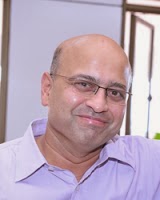
Prof. Mahesh P. Bhave

If you go to Reliance Fresh or Big Bazaar, and are about to pay for the merchandize you have bought, chances are greater than even that the person at the cash register has no change to give you. He will ask you if you could produce the exact amount.

If asked as a sheepish request, I am able to occasionally forgive. Yet most times, the tone is: what kind of a shopper are you that you do not carry exact change for my convenience?

I once tried telling the film-star wannabe behind the cash register in Pune – tight shirt, even tighter trousers, and hair slickly perfect – that it was his and his store’s duty to always have change before letting customers stand in the line. He did not say anything. But his expression was: Your advice for your own galaxy; this is India. In lieu of change, he offered me Cadbury’s candy.

Despite Consumer Behavior courses taught en masse in MBA programs, customer centricity is absent in new Indian retail (and elsewhere in India too, but more of that in future articles). I am all for the convenience of open shelves, and putting things in the basket, or taking things out of it, until I reach the point of payment. Lines are bad enough, but I could do without the quasi-robots on the other side of the counter.

Wednesday, November 6, 2013

LOST IN THE AGGREGATES- COMMENTARY ON THE REPORT EVOLVING A COMPOSITE DEVELOPMENT INDEX OF STATES


By Prof. Abhilash S. Nair
Prof. Abhilash S. Nair
Since independence, successive governments have endeavored to develop an egalitarian India whose economic development percolates to citizens living across the country. A major step in ensuring this outcome has been the various studies that have identified backwardness of different states in India. Accordingly, the central resource allocation is channeled so as to bridge this development gap. The Raghuram Rajan Committee report is yet another step towards achieving this goal. The report emphasizes on an objective method of identifying backwardness and linking it to central assistance to state, though this issue is being independently studied by the thirteenth finance commission set up under the chairmanship of Shri. Y.V. Reddy. 


Any report on central development assistance sets off a race, among the states, to be backward. This report is no exception. The states that have garnered the ‘least developed’ status, seem to have no complaints against the report while others seem to be upset about the report. Having said that, there are some serious concerns which this report may look forward to address before being taken up for implementation. As has been highlighted in many other commentaries on this report, the dissent note by Dr. Shaibal Gupta addresses almost all the concerns raised by academicians and policy makers. However, what is interesting is the way in which the report deliberates and attempts to allay the concerns raised by Dr. Gupta by looking at the impact at an aggregate level. Interestingly, many states that may loose out on central assistance if the report is accepted also raise the same concerns as Dr. Gupta. I shall be commenting on some of these issues in the context of Kerala:
  

Excerpts from his recently published article in The New Indian Express on 19th October, 2013 Op Ed. For full article please visit  http://epaper.newindianexpress.com/174148/The-New-Indian-Express-Kochi/19102013#page/9/2

Abhilash S. Nair is an Associate Professor of Finance, Accounting and Control at IIM Kozhikode.

Tuesday, October 22, 2013

PASCAL’S WAGER: A MEDIEVAL GOD VS. A MODERN GOD


Prof. Kausik Gangopadhyay

By Prof. Kausik Gangopadhyay

Blaise Pascal, a gifted French mathematician and physicist of the seventeenth century, was an interesting character. Working on his own, Pascal discovered most of the Euclidean Geometry in his early adolescence. By his early teens, he invented a calculating machine—with no less than 20 prototypes called “Pascalines” made—to perform all four arithmetic operations. Unfortunately, prohibitively high making cost of that device impeded the commercial success of this venture, patented by Pascal. Far from being an exhaustive set of Pascal’s scientific endeavours, these are merely illustrative of Pascal’s all-compassing genius!

The other side of Pascal’s character was his deep religiosity. In fact, bidding science adieu he turned to metaphysical pursuits at an early age of 31. The remaining eight years, he dwelled on the Christian philosophy and lived a life of “Renunciation, total and sweet”.  This is the time when he came up with a philosophical argument, now known as “Pascal’s Wager”, which is a gambler’s take on the basic question: “God is, or He is not”.  Unsurprisingly, Pascal was an avid gambler for quite some time in his earlier life.

Sunday, October 20, 2013

IIMK RESEARCH SEMINAR BY PROF. P V ARAVIND

Prof. P V Aravind (Delft University of Technology, Netherlands) delivered a very interesting talk entitled "Energy, Renewable Energy & Fuel Cells" at IIMK on 18th October. According to Prof. Aravind, fuel cells are versatile energy generation solutions that can use a variety of fuel sources including natural gas, bio-gas from waste, ... and can thus be a component of the energy generation mix for the future.

IIMK RESEARCH SEMINAR BY PROF. NILAY YAJNIK


Prof. Nilay Yajnik of  NMIMS Mumbai delivered a very interesting talk entitled "Global Virtual Teams and their Relevance in Management Education" at IIMK on 15th October. According to Prof.  Yajnik, working in Global Virtual Teams has now become a standard practice in several business organizations.

Saturday, October 12, 2013

ERUDITION: THE LOST CREED


By Prof. Kousik Guhathakurta

Prof. Kousik Guhathakurta
I was flipping through the pages of a reasonably fat book when a student entered my office for some usual reason (which could be anything between a request for reconsideration of evaluation and a genuine academic clarification). I do not quite remember what he exactly wanted and how I reacted. That is neither interesting nor too important. What is definitely interesting and what I definitely remember is what followed the initial exchanges.  His eyes fell on the fat volume in my hand and his looks changed to one that showed a mixture of surprise, anxiety and may be even disgust! He could not help himself asking “What is that book, sir?” I can assure you of his vision –he could see exactly what the book was. Nor was he particularly perturbed with the size- B-school boys are exposed (I only said exposed) to fat books also. What seemed to disturb him was the title of the book- “The Origin and Development of the Bengali Language”. If you still have not gauged his exasperation let me also tell you that I happen to be on the faculty of Finance.

Tuesday, October 8, 2013

DO INDIAN B-SCHOOLS MAKE THEIR GRADUATES SUSTAINABILITY-SENSITIVE?


Prof. Keyoor Purani
By Prof. Keyoor Purani

As the large corporations, the world over, jostle to find a place in various sustainability rankings having realized that the stakeholders are getting more and more inclined to ‘clean & green’ capitalism, sustainability is on the top agenda for most companies. Business performance measured by triple bottom-line demand complete paradigm shift in how an organization functions asking for a new mind-set and newer models of doing business.

Are business schools in India preparing their young MBAs for these changes in the business world? Are Indian b-schools aligning their curricula to the changing demands of the employers who hire their graduates? If we have to evaluate leading Indian business schools on their ‘compliance’ to provide sustainability-sensitive graduates, what kind of picture is likely to emerge? Our recent research (with Daragh O’reilly and Sunil Sahadev) attempt to explore these questions as we prepare a roadmap for business schools to bring sustainability in their curricula as part of a project funded by the British Council.

Thursday, September 26, 2013

IIMK RESEARCH SEMINAR BY PROF. BIKAS K CHAKRABARTI


Econophysics of Income and Wealth DistributionsProf. Bikas K Chakrabarti of the Saha Institute of Nuclear Physics delivered a very interesting talk entitled "Econophysics of Income & Wealth Distributions in Societies" at IIMK today. According to Prof. Chakrabarti, increasingly, a huge amount of statistics have been gathered which clearly indicate that income and wealth distributions in various countries or societies follow a robust pattern, close to the Gibbs distribution of energy of molecules in a gas, studied for more than a century in Physics.

Sunday, September 22, 2013

MARKETING POCKETLESS SHIRTS


By Prof. Mahesh P. Bhave
Prof. Mahesh P. Bhave
  
I bought my first shirt without a pocket on the left front panelby accident. While browsing through the piles of shirts at a well-known retailer, I liked the lightly striped white shirt – the texture of the fabric, the shape of the collar. Only when I opened the package and wore it did I realize it had no pocket. I thought this was a manufacturing defect, and that I should return or exchange it.


When I revisited the store, however, I found that this was no mistake. In the language of software, this was no bug, but a feature, by design. What are they thinking, I thought?In visits to other stores, I confirmed that this was indeed a trend. In retailer after retailer, across brands, European designers were producing shirts without pockets. For a while, I noticed this was confined to European designers, not Americans.

Wednesday, September 18, 2013

CULTURAL DETERMINANTS OF CHINESE NEGOTIATIONS BEHAVIOR


 By Prof. G. Venkat Raman
Prof. G. Venkat Raman

There is a vast body of literature that deals with culture and its impact on international business negotiations and broadly speaking there are four approaches, namely, structural-processual approach, negotiators’ behavior approach, cognitive-strategic approach and the stages approach. The structural–processual approach talks about factors like context/situation, processual/behavioural aspects and other strategic goals/ outcomes.[1] The negotiators’ behavior studies impact of culture on negotiations and surveys are conducted to access, analyze and explain cultural impact on negotiations behaviour. The cognitive-strategic approach links behavior and actions of negotiating players to cognition and this approach describes negotiations from the perspective of influence cultural dispositions have on negotiations behavior of parties involved. The stages approach involves examination of cultural impact on negotiations behavior in terms of stages.